StoneGnome

Crochet Love · Crochet & Tunisian Crochet · Studying, Developing, and Teaching Crochet Techniques

  • Home/Blog
  • Crochet
    • Basic Skills
    • Beyond the Basics
    • Advanced Crochet
    • Stitches and Stitch Patterns
  • Tunisian Crochet
    • Basic Tunisian Skills
    • Beyond the Basics
    • Advanced Tunisian Skills
    • Stitches and Stitch Patterns
  • Tutorials n Guides
    • Guides
    • Step by Step Tutorials
    • Stitches and Stitch Patterns
  • Patterns
    • Pattern Posts
    • StoneGnome Shop ♥
    • Visit Ravelry
    • Visit LoveCrafts
  • Themes
    • Slip Stitches (ss)
    • Felting
    • Hats
    • Ribbing
    • Waistcoat stitch Love
    • Top Stitch
    • Amigurumi
    • Small Hearts
    • Ornaments
    • Seasonal Themes n more
  • About
    • Contact Me
    • Copyright and Selling
    • Personal Data & Privacy

Most of us cannot crochet with both hands. Though sometimes it would be useful to be able to.

Another kind of reverse stitches

When I made wings for a pumpkin (yes, for a pumpkin, a Halloween pumpkin), I wanted the reverse side of the second wing to look like the front side. Including the small ridges. 

Updated September 2023

It would have been great if I could have worked the second wing with my left hand. Then it would truly be 'mirrored' versions of the same item.

There is an alternative. In Tunisian crochet, there is something called 'reverse stitches'. Reverse stitches in the world of regular crochet are usually related to stitches like the 'crab stitch', where you crochet in the opposite direction (right-handed work from left to right).

However, with Tunisian crochet, the reverse stitches are not made in a different direction but on the reverse side of the work.

All you do is: 

  • Position the yarn in front of the hook and your work. 
  • Then, insert the hook from BEHIND the work into the regular stitch. 
  • Yarn-over, pull up a loop and complete the stitch as usual.

Regular crochet - reverse stitches
This is really all there is to it, and it can be done with regular crochet too.

Video

If you prefer a video to see how it can be done, then I made one for you here.


Try it. Practicing reverse stitches is just like learning any other new stitch. It might seem uncomfortable in the beginning, but then it gets easier and easier until it feels like a piece of cake.

:)
Share
Pin
No comments

It must be Father's Day month as most of the world celebrates Father's Day sometime during June. 

Crochet patterns

To honor all Fathers, there is a special offer for you - for a limited time only.  

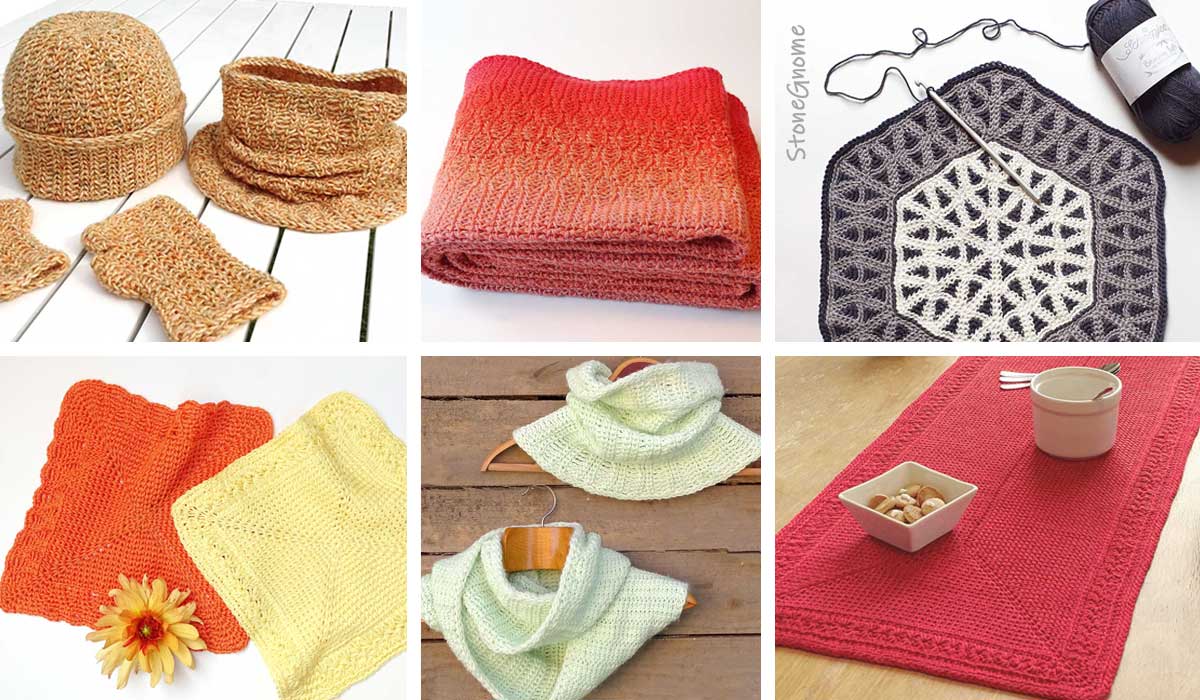
All the StoneGnome patterns made of little crocheted hearts - aka waistcoat stitches - are free or available with a 30% discount.

What to Choose

You can make a pillow from the mandala pattern or crochet something for your father to wear that can keep him warm during winter. Gloves, ear warmer, a beanie, or a cowl. 


The musician Brian Margell recently crocheted an infinity scarf for his wife. See his photos on Instagram @margellmusic 


The Patterns

All waistcoat stitch patterns can be found from the menu Themes > Waistcoat Stitch LOVE.

Paid patterns can be purchased from Ravelry or at the StoneGnome shop.

Use the code DAD2023 to get the discount.
(At Ravelry or at the Stonegnome shop only).

The code expires on June 14th (UTC).


crochet patterns using the waistcoat stitch
Share
Pin
No comments
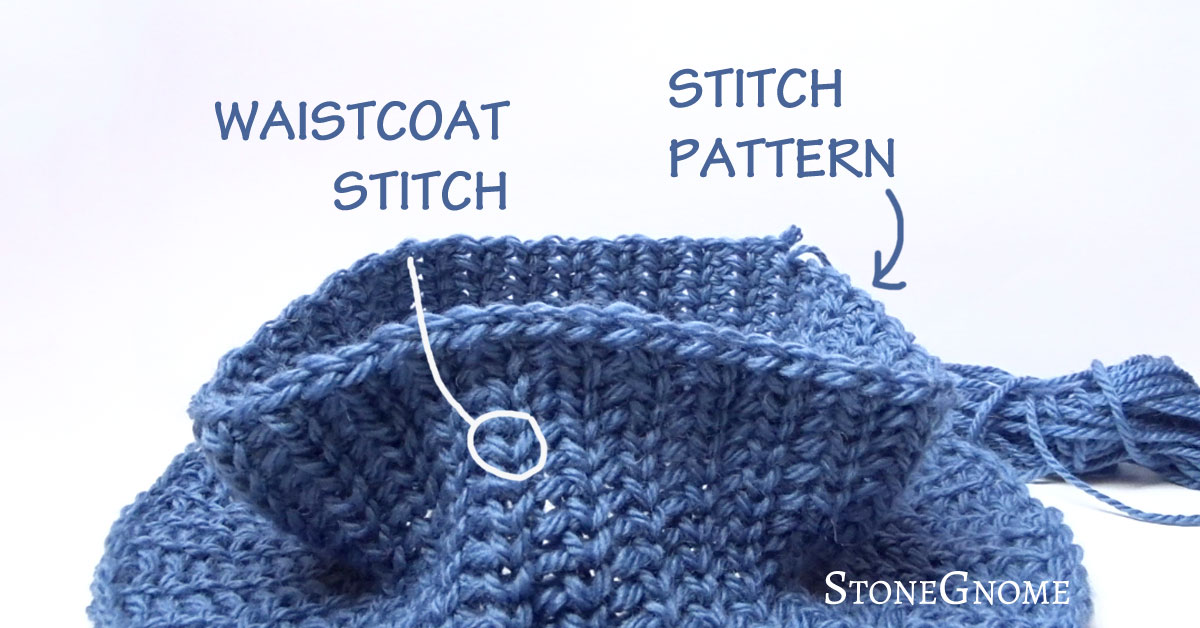
The waistcoat stitch is a lovely little thing and you can make beautiful yet easy and fast-worked stitch patterns with it. Let me show you.

Waistcoat stitch and stitch pattern tutorial

Share
Pin
No comments
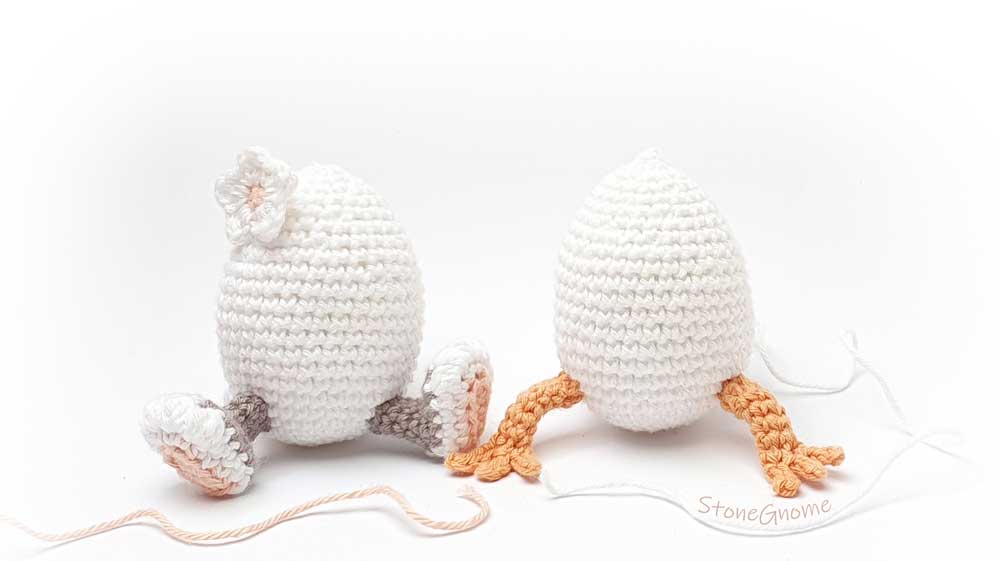
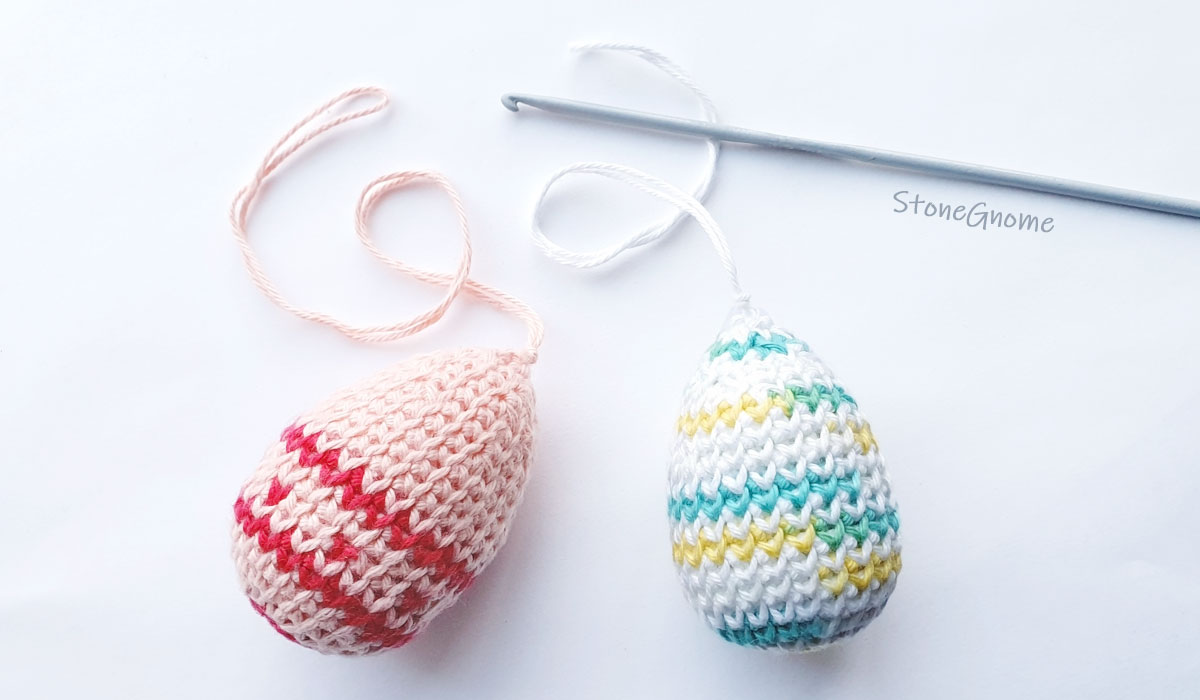
Bunny Egg usually hangs out around Easter enjoying the company of Junior Egg. 

Crochet Easter Bunny Egg and Junior Egg

Hence, the pattern for Bunny Egg has been updated and now includes Junior Egg. The two of them love that ♥ 

The 2-in-1 pattern is available at Ravelry, LoveCrafts or you can purchase it in the StoneGnome Payhip store. It's available in English and Danish.

If you want to try Junior Egg for FREE, then you'll find Junior right here.

Updated. This post has been updated as of March 2023

Skill level

The pattern is written for crocheters that are familiar with amigurumi. Difficulty level is intermediate/advanced. There are a few special stitches like BLO and Puff stitches. They are slightly modified, but - of course - explained.

Junior is the easiest one to make, while you might need a little peace, glasses and good light when you make the legs for Bunny Egg.

Size and Yarn

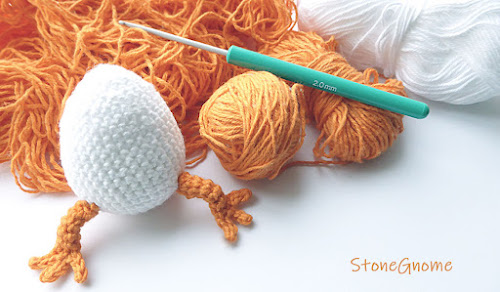
The Easter Egg will be around 6.5cm tall (2.6") if you work with the recommended hook size 2-2.5mm (US 0-B1 or steel 4, UK 14-13).

Use regular cotton yarn for amigurumi.

It could be something like Scheepjes Cotton 8 or similar.
Colors could be:
  • 502 white
  • 710 grey
  • 649 soft coral (or 715 nude).
  • 639 Burned Orange.
Bunny Egg and Junior Egg


I tried Scheepjes Organicon (Ravelry link), which was soft and lovely to work with. Even a bit thick and fluffy in the right way. Totally recommend this for a luxury project and if the egg is for decoration purposes only.

However, if you plan to use the Easter Egg as a toy, the yarn might get a little worn out faster than other yarn. At least that is what I experienced when I used it for samples and had to frog it several times.

More versions

Margie helped test and proofread the original patterns. Check out her latest colorful Junior Eggs from 2023 or her very, very cute Bunny Egg on Instagram. 

Thank you Margie for being such a patient and positive tester and proofreader.

Enjoy the pattern and Easter!

Related blog post: Junior Egg
Share
Pin
No comments
This heart was made for#WorldHeartDay (sep 2022), but it also works perfectly for Valentines Day.

World Heart Day - free crochet pattern

Use the heart to remind you of what is important in your life and what makes you happy. ❤ 

Written Pattern

Use any yarn and hook that works for you. I used Scheepjes Catona and hook 3.5 mm (US E/4- UK 9)

Abbreviations
(US terms)
ss    - slip stitch
ch    - chain
sc    - single crochet
hdc  - half double crochet
dc    - double crochet
[ ]    - all in the same stitch

Make a Magic Ring. Work 1st round in the Magic Ring.

Round 1 
Ch 1, 3 dc, 2 sc, 1 hdc, 1 dc, 1 hdc, 2sc, 3 dc, ch1 and 1 sc in the ring.
Pull the magic ring semi-tight.

Round 2 
sc in the chain, (2dc in the next st) x 4, 
1 hdc in the sc, 1 hdc in the hdc,
[1 hdc, 1 dc, 1 hdc] in the dc, 
1 hdc in the hdc, 1hdc in the sc, 
(2dc in the next st) x 4, 
1 sc in the chain, 1 ss in the sc.

Pull the magic ring as tight as possible (don't break the yarn). Cut the yarn and pull at the last loop on the hook till the strand is free. Pull tight and weave in ends.

Pattern Chart

If you prefer a chart, then see below. I will post these on Instagram too. 

Round 1 starts at the red dotted line. Round 2 starts at the blue dotted line.

❤ StoneGnome


If you want more hearts, then check out my other small heart posts. I love hearts ❤
Share
Pin
2 comments
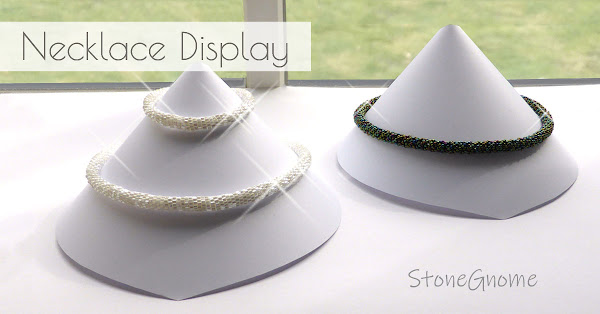
Make an angel display for a crocheted necklace or a beaded crochet necklace. The display can be used for selling items at a market, if you attend an exhibition, or maybe for a special gift. 
Necklace Display - for Beaded Crochet Necklaces
I made the display in 2017 for an exhibition I was attending with other textile and yarn freaks; weavers, filters, knitters, and crocheters. I wanted to present my crocheted necklaces in a nice way.

UPDATE: Due to requests, this writing and the templates below have been updated in January 2023.

First, I found a template (and tutorial) at Georgia P Designs. There are cones for bracelets, a cone for a necklace, and a flat-back necklace display stand.

However, one of my necklaces comes with a tight bracelet. I wanted the necklace and the bracelet to be on the same display, which required the bottom of the template to be rather wide compared to the top of the template. Otherwise, the distance between the two would be too big.

After playing around for a little while, I ended up with a display shaped like angel wings. 
The files are available from my google drive. You can get a full-size copy from the links.

  • Angel Display template - as JPG
  • Angel Display template - as PDF
Make the printed side the back of your cone. The print on the template files is rather pale, so it doesn't show through the paper.

If you can't print close to the edges, you can shrink it a bit (your printer dialog should help you with this) - OR you can ignore the missing print at the margins. It should be fairly easy to guess where to cut. Use the dotted line as a guide for the front tip.

Necklace Display - Angel Wings

Carefully fold it, so the back flaps overlap with about 1cm (0.4in), and glue the part that overlaps.

I've used heavy 190g A4 paper with a very smooth surface, so I sewed a couple of stitches on the back to make the necklaces and the bracelet stay in place. I've seen others cover the display with wallpaper or likewise and I'm guessing a rougher surface will prevent the necklaces from slipping.

The Exhibition

The keywords for the exhibition in 2017 were to show some of the many different things you can do with yarn and textiles. It used to be an annual recurring event in Gudhjem Museum (Denmark, Bornholm). The last years have been hard on exhibitions due to lockdowns and restrictions, but hopefully, there will be more yarn and textile exhibitions in the future. 

I enjoyed the beaded crochet work a lot, so I might also need the displays again one day.

Read more: Beaded Crochet Rope Necklace

Links to Display Ideas

Here are a couple of other display ideas and templates in case you need something special.
  • Georgia P. Designs templates and tutorial
  • A Plywood Jewelry Pyramid tutorial can be found at Collectivegen.com (former 'A Pair & Spare'), which also posted templates for a couple of Wooden Jewellery Holders in May 2022.
  • 3 other DIY Necklace displays are present at Tutorial De Artisana (eng: Craft Tutorial)
Share
Pin
No comments
It's time for Christmas Crocheting.
Christmas Ornament Patterns

Here are links to some free Christmas crochet patterns to you from StoneGnome.

Little ornaments are great to crochet and hang in the window or on a Christmas tree. They are also pretty fast to make, which is excellent if you have busy days or just need something easy to make.

I love the crochet snowflakes. They are small, bright, and last all winter as window decorations. And btw, there are two different versions. The second snowflake might have been hiding, so use the link below :)

I also love hearts; you can use them for more yearly occasions. And then of course the pretty stars. Very easy and relaxing to make.
  • World Heart Day
  • Snowflake #1
  • Snowflake #2
  • A Little Christmas Heart
  • Sibling Stars
  • Double Heart

Christmas Crochet Ideas

If you get into it and suddenly have a lot of crochet beauties, then use the crocheted items as part of your Christmas wrapping for a more personalized look and feel on the presents. Or make a tree branch mobile by hanging ornaments on a pretty curly branch from the garden.

Happy Christmas Crocheting!
Share
Pin
No comments
Crochet your own decorated eggs. Use a basic egg and change colors as you wish for nicely decorated eggs.

crochet Easter eggs

If you use waistcoat stitches for your egg you get different options. Like small, heart-shaped dots ♥ 

Share
Pin
No comments
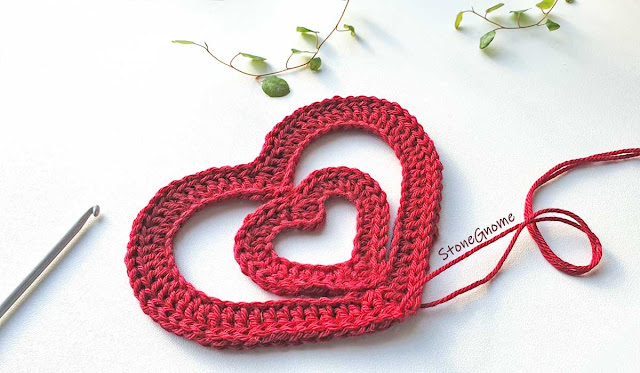
This adorable double heart is double love. Give it to someone extra special or make it for your own joy.

Double Heart - Crochet Pattern

The heart ornament is made in one piece, so there is no sewing the parts together in the end.

Share
Pin
No comments

The innovative crochet pattern is great as a winter project. Tricky Triangles is a mandala presenting a new way to crochet in the round.

Tricky Triangles Mandala Crochet Pattern

The mandala will be soft and drapey and excellent for making a pillow or you can make it a decorative table topper. There are a lot of other possibilities for hexagons if you google it.

The Mandala

I'm not sure if the level of it is beyond basics or advanced. It might more be a matter of preferences and whether you can find a hook that works for you.

It's colorwork and it requires you to make somewhat uniform stitches. The main stitches are slip stitches and waistcoat stitches. If you are not sure whether these stitches suit you or not, try the FREE introduction pattern Tessa's Triangles first.

Read more: Slip Stitch Tutorials.
Read more: Waistcoat stitches and Stitch Patterns in Rounds

Tricky Triangles comes with a 30% introductory discount. The discount is only available on Payhip or Ravelry and runs out in 2 weeks (Nov. 18th Copenhagen time). Use the coupon code TRICK to get the discount.

The mandala pattern is available in English (US terms) and Danish. 

Get the pattern at Ravelry, at LoveCrafts, or right here via my new Payhip Store.

Tricky Triangles

Yarn, Hook sizes, and Final Sizes

In theory, you can use any three yarn balls and a relatively large hook. Preferably a hook with a relatively small head. For the best result, the yarn should be uniform and soft, with a smooth look.

The yarn I have used is very soft and likable, so I can certainly recommend it.


Peppermint and Licorice
Hook size 5mm (H-8). It gets around 30cm (11.8") wide.
Crochet Mandala. Peppermint and Licorice Scheepjes Organicon/Bamboo Soft.
Organicon - 220 Broken Almond
Bamboo Soft – 263 Smokey Diamond (dark)
Bamboo Soft – 264 Antique Silver (grey)
(Big) Red.
Hook size 8mm (L-11). The red is approximately 37cm (14.5") wide.
Crochet Mandala. (Big) RedScheepjes Merino Soft.
645 Van Eyck (orange)
621 Picasso (red)
623 Rothko (dark red)

Yarn Packages

Littlebugz.dk made yarn packages for both versions. It might be of most relevance if you live in Denmark, Sweden, and Norway - or close. She is good at adding discounts on yarn packages for my patterns.

Have a look at the yarn packages at Littlebugz.

FYI. A lot of the yarn I use is sponsored by Littlebugz.dk. Littlebugz then makes yarn packages for my patterns. And in case you wonder. Littlebugz doesn't sponsor my opinion or anything other than the yarn 😊

Thank You

Thank you to all that have helped me out. Janelle did a great job before it was even a pattern. She helped me with terms and the structure of the written pattern. Then Anita Reinehr came in early to do a superb tech edit. Unusual yes, but with a new thing, it felt important to do a tech edit before having the pattern tested. 

Finally, a lot of people did testing. Some just partly, some only on the early Tessa's Triangles. Thank you to all of you too; Pamela Tan, Robyn Kaltea, Ruth Lister, Jess Wells, and more.

Share
Pin
No comments
Here is a nice little FREE spider web pattern.
Spider Web Crochet Pattern

Use it for a coaster or make more rounds and use it as a table topper. Once you get the pattern it is very simple and you decide how big you want it.

Yarn and Hook Suggestions

You can make it of any yarn you want and then a relatively large hook. Btw, I recommend a dark but NOT BLACK yarn, to begin with. It is VERY difficult to find the right places to insert the hook, when using black yarn and working with waistcoat stitches.

I’ve tried two combos that worked well for me:
Mixed Fingering Yarn (Semi-light)
  • Wool yarn blend (orange) and cotton yarn (black). Both with yardage around 210m/50gr (230yds/1.76oz)
  • Hook size 4 mm (US G-6)
Cotton Yarn - Fingering
  • Cotton yarn for amigurumi with yardage around 170m/50gr (186yds/1.76oz)
  • Hook size 5 mm (US H-8)
If you are making a coaster meant for warm chocolate, tea, or coffee, you should use pure cotton yarn.

Instructions

The spider web pattern is based upon Tessa’s Triangles (a hexagon pattern). You can find tips and secrets in Tessa’s Triangles that can be useful for the spider web as well.

Abbreviations
sc = single crochet stitch
ss = slip stitch
ws = waistcoat stitch
-blo = back loop only
** = repeat all the way around

A waistcoat stitch is a single crochet stitch, where you insert the hook between the legs of the previous stitch.

Start with the web color (dark).

Foundation
6 loose sc in a magic ring. Add a stitch marker between the legs of each stitch if it helps you.
Join the round with an ss-blo in the first sc.
Note. This is a tricky part as the first sc can be pulled at so much, that you can’t find where to insert the hook when doing the ws. This is why I recommend attaching stitch markers right after making the magic ring.

Round 1)
*ws in the current sc (change color to orange while pulling up the last loop of the ws),
ss-blo in the next sc while changing color again *
Note. Work the final ss-blo into the first ws of the round.

Round 2)
*ws in the current ws (change color to orange while pulling up the last loop of the ws),
ss-blo in every ss,
ss-blo in the next ws while changing color *

Round 3-4)
Repeat round 2

Round 5-6)
Repeat round 2, but without the color changes.

More Rounds
Work round 2-6 as many times as you want.
Crochet mini spider web

Final Two Rounds

Round 7)
Repeat round 2

Round 8)
ws in the current ws (change color to orange while pulling up the last loop of the ws),
* ss-blo in every ss,
ss-blo in the next ws while changing color,
2 ws in the current ws (change color to orange while pulling up the last loop of the second ws) *

Note. Work 2 ws in the first stitch of the round too, but skip the color change.

Finish Off
Cut the yarn.
Expand the last loop till the yarn end is through.
Weave in the ends.

Happy Halloween!
Share
Pin
No comments

Amigurumi and Tunisian Crochet arent’ something you very often think about as related. However, Tunisian crochet can be a very good choice for making nice and soft amigurumi.

Tunisian crochet Pumpkin

I missed working with Tunisian crochet stitches. Then I got inspired by our creative kids (age 6 and 8) to make a pumpkin.

UPDATE. This pattern has been updated with extra items and features. Read more here.

The body of the pumpkin is made of Tunisian crochet stitches. The stem and the blossom end are regular crochet.
Tunisian crochet Amigurumi

Yarn.
I recommend the wool yarn blend Scheepjes Metropolis. It’s very very nice to work with and supports the softness of the Tunisian crochet stitches that makes the pumpkin nice to hold.

Size. The pumpkin will be around 7cm tall and wide (2.8”) with the suggested yarn here.

Currently, you can purchase the Pumpkin Pattern at Ravelry and at LoveCrafts.
- OR -
Find the pumpkin at my payhip store and get it for FREE when you use the coupon code PUMPKIN
(The coupon code expires November 1st 2021.)

Happy Halloween!


Share
Pin
No comments

A cute little hexagon made with unusual stitches.

Tessa’s Triangles - Hexagon crochet pattern

Make one little hexagon and you have a coaster. Make more hexagons and you can make a bag and with a little patience maybe even a blanket.

Introducing New Techniques

Tessa’s Triangles hexagon pattern is an introductory pattern. Learning how to work these stitches is the key to more advanced patterns. Another pattern is coming up soon at StoneGnome.com. You might also get ideas for making some on your own after making the hexagon. 

Tessa’s Triangles is a free pattern and is available in English and Danish.

Get the Pattern

Get the pattern now in StoneGnome’s new Payhip store*, on LoveCrochet, or add it to your library at Ravelry.

*Payhip will ask for your email, but that is only to make sure you get access to the pattern.

Pattern update: The hook conversion in the written pattern should be hook size 5mm = US H-8, as stated in the video tutorial. 
If you are happy with using US I-9, then please keep using that.

Want the Newsletter? Find the orange button on this site and sign up for the newsletter.


Tricky Parts

There ARE tricky parts in Tessa’s Triangles. Finding the right spot to insert the hook, when making waistcoat stitches in a round is probably new to pretty much all crocheters. It took me a while to figure out too.

Round 1 is tricky. So much is going on at the same time. Work slowly and take your time. 

Cheat tips to get you started.
  1. Make a one-colored sample to begin with.
  2. exchange the ws in rnd 1 with loose(!) sc*. (Make ws from rnd 2.)
  3. make chains instead of slip stitches.
* It will not give you a nice star in the middle.

Anita Reinehr did tech-edit on the pattern and suggested inserting a stitch marker between the legs of every stitch of the first round, to be able to find them. See her photo on Instagram.

Visual Learner?

To support the written pattern, a video is available. Some parts might be easier to do if you see how I do it.

Direct link to the video https://youtu.be/_uiaJC1xGgQ

Share

Share your hexagons. Tag me on Instagram (with @stonegnomedesign) or Facebook (with @stonegnome), so I can see how far you get. Feel free to also tag me, if you run into trouble. Then I’ll do my best to help you out. <3 

Have fun with this.

Tricky Triangles Teaser
Share
Pin
No comments
Tunisian Crochet is fun and can be very meditative. Here is how you make a traditional foundation row to get started.
Tunisian Crochet Founcation Row

If you are a newbie to Tunisian Crochet, try it!

Updated September 2021. Originally posted as part of the Tutorial: Tunisian Top Stitch from 2016.

Tunisian Crochet in General

Is this your first try on Tunisian Crochet? If so, you should know it is all about a forward motion/ forward pass and a back motion/return pass. On the forward pass, you pick up loops. On the return pass, you finalize each of the crochet stitches.

You also insert the hook a little different from regular crochet in most cases - as you have other options here - which makes the stitches look a bit different too.

However, the way you work each of the stitches is still crocheting.

The outcome of a Tunisian Crochet piece can be a lot more like knitting, which is great for the drape and thereby for making wearables, scarfs, and other soft crochet pieces.

Tunisian Foundation Row

Choose a yarn and a hook that is at least two sizes bigger than the yarn label suggests. Most hooks will easily have space for 10 stitches on the neck. Else, just make fewer chains in this tutorial.

1) Chain row
Make a slip stitch and insert the hook. Crochet 9 chains for a foundation. This will give you 10 stitches, as the loop on your hook is number 10.
Tunisian Crochet Chain Row

Now turn your work sideways, so you can see all the bumps that might usually be on the back of your work. These are the loops you will insert the hook into.
Tunisian Crochet - hook into the back bumps

2) Forward Pass - pick up loops
Insert your hook into the first bump, right next to the hook. (Some skip the first bump and it CAN be difficult to hook into. So if it suits you better, do that.)

Yarn over (yo) and pull through one loop. You now have 2 loops on the hook. They stay there during the forward motion.

Tunisian Crochet - make the first stitch


*Insert the hook into the next bump, yo, and pull through one loop only.* Repeat this till you have used all bumps. When you have reached the end, you have 10 loops on your hook.
Tunisian Crochet - forward pass

3) Return Pass - complete each stitch
Chain one. (Yo and pull through one loop only). This is the left edge of your work.
Tunisian Crochet - left edge

*Yo and pull through two loops.* Repeat until you only have one loop left on the hook.
Tunisian Crochet - return pass

AVOID the temptation to pull tight, when there is only one loop left on the hook. You can tighten your work so much, that it is difficult to proceed from here with a nice result.

Tunisian Crochet - Foundation Row

Tadaa!! Now you are ready for your next row :)

From here most people learn the Tunisian Simple Stitch (tss), the most commonly known stitch in the Tunisian Crochet world.

You could also try something nice and a bit different like the lovely Tunisian Top Stitch. It's one of my favorite stitches and it doesn't get enough attention in the crochet world.

You will find a tutorial right here: Tutorial: Tunisian Top Stitch

Did You Know?

Instead of starting with a chain row, it is also possible to do a cast-on. You can either do the Tunisian Single Hook cast on or the Tunisian Crochet Cast On. The last one requires two hooks but is really beautiful and very popular on this site.

Tunisian Crochet Cast On - Single Hook
Tunisian Crochet Cast On - Two Hooks

Choose whatever works best for you with a specific Tunisian Crochet Project.
Share
Pin
No comments
Newer Posts
Older Posts

Newsletter

Don't miss the next tip or pattern
from StoneGnome.

Find StoneGnome at

  • Ravelry
  • LoveCrafts

  • Facebook
  • YouTube
  • Pinterest
  • Instagram

Loop Legends

  • From Image to Crochet Chart
  • How to Find Your Gauge
  • Mini Neck Warmer
  • Free Snowflake Pattern
  • Guide: Splitting Yarn
  • Chain Mail Shirt
  • Use Ribbon, Not Cassette Tape
  • Tunisian Crochet Cast On

My favorite Links

  • StoneGnome Pattern Shop
  • StoneGnome at Ravelry
  • StoneGnome at LoveCrafts
  • Crochet Kim
  • Annie's Catalog
  • Designing Vashti
  • Stitch Fiddle
  • Stitchboard · Pattern Wizard
  • Free Vintage Crochet

Labels

Bornholm Split Crochet advanced amigurumi basic beads christmas crochet crochetChart easter edge felting filetcrochet freePattern guide hat miteredCorner ornament paidPattern pattern ribbing shoes slipStitch spiral stitchPattern topStitch tunisian tutorial

All Crocheticles

  • ▼  2025 (3)
    • ▼  June (1)
      • Slim Tunisian Breeze Scarf
    • ►  February (1)
    • ►  January (1)
  • ►  2024 (6)
    • ►  December (1)
    • ►  November (1)
    • ►  October (2)
    • ►  April (1)
    • ►  March (1)
  • ►  2023 (7)
    • ►  September (2)
    • ►  June (2)
    • ►  March (1)
    • ►  February (1)
    • ►  January (1)
  • ►  2022 (3)
    • ►  November (1)
    • ►  April (1)
    • ►  February (1)
  • ►  2021 (9)
    • ►  November (1)
    • ►  October (3)
    • ►  September (2)
    • ►  May (1)
    • ►  March (1)
    • ►  February (1)
  • ►  2020 (15)
    • ►  December (1)
    • ►  November (1)
    • ►  October (2)
    • ►  May (2)
    • ►  March (2)
    • ►  February (3)
    • ►  January (4)
  • ►  2019 (8)
    • ►  December (2)
    • ►  October (2)
    • ►  September (1)
    • ►  May (1)
    • ►  March (1)
    • ►  February (1)
  • ►  2018 (15)
    • ►  June (3)
    • ►  May (1)
    • ►  April (4)
    • ►  March (1)
    • ►  February (4)
    • ►  January (2)
  • ►  2017 (48)
    • ►  December (4)
    • ►  November (3)
    • ►  October (2)
    • ►  September (5)
    • ►  August (5)
    • ►  July (3)
    • ►  June (5)
    • ►  May (3)
    • ►  April (4)
    • ►  March (5)
    • ►  February (5)
    • ►  January (4)
  • ►  2016 (25)
    • ►  December (5)
    • ►  November (7)
    • ►  October (5)
    • ►  September (4)
    • ►  August (4)
FOLLOW STONEGNOME @INSTAGRAM
Powered by Curator.io

Ⓒ StoneGnome · Created with · by BeautyTemplates