StoneGnome

Crochet Love · Crochet & Tunisian Crochet · Studying, Developing, and Teaching Crochet Techniques

  • Home/Blog
  • Crochet
    • Basic Skills
    • Beyond the Basics
    • Advanced Crochet
    • Stitches and Stitch Patterns
  • Tunisian Crochet
    • Basic Tunisian Skills
    • Beyond the Basics
    • Advanced Tunisian Skills
    • Stitches and Stitch Patterns
  • Tutorials n Guides
    • Guides
    • Step by Step Tutorials
    • Stitches and Stitch Patterns
  • Patterns
    • Pattern Posts
    • StoneGnome Shop ♥
    • Visit Ravelry
    • Visit LoveCrafts
  • Themes
    • Slip Stitches (ss)
    • Felting
    • Hats
    • Ribbing
    • Waistcoat stitch Love
    • Top Stitch
    • Amigurumi
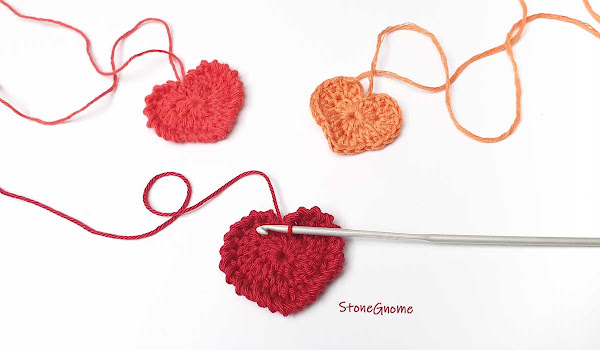
    • Small Hearts
    • Ornaments
    • Seasonal Themes n more
  • About
    • Contact Me
    • Copyright and Selling
    • Personal Data & Privacy
Waistcoat stitches in the round are fantastic for colorwork. They stack neatly, create a smooth, uniform fabric, and fill up space beautifully.

Crochet holder graph

If you’d like to try it, I’ve put together a small chart along with a few helpful tips.

Waistcoat stitches worked in the round are great for projects like pillows, bags, cowls, beanies, and more.

For my sample, I added 8 stitches to a round, and then the colorwork happened to fit an old glass. So, now the glass can be upgraded into a fancy crochet hook holder. - And yes, the glass is very happy with its new look.

The Heart Chart

I created the heart chart using StitchFiddle. I've shared it, so you can view or copy the chart for easy editing. FYI. StitchFiddle offers a handy progress tracker to help you keep your lines straight. 

If you prefer a paper version, click and print this image.

Hearts Crochet Chart

Never tried a Crochet Chart before?

If you're new to reading crochet charts, don't despair, it is easy to learn the basics: Each rectangle in the chart represents one stitch. Since this pattern is worked in the round, keep working in the same direction and do not turn your work. Read every round from right to left (if you are left-handed from left to right) and keep following the chart in the same direction as you crochet.

waistcoat stitch color graph

Just to let you know how easy it is, here is a written version of the beginning - BUT, please read additional notes further below before you do anything but a swatch:

Foundation. Chain 33 or more (I made 41).
  1. Work 1 single crochet stitch into each chain. (I prefer turning the chain over to insert my hook into the back bumps.). This is line 1 on the chart.

  2. Do not turn - instead, join into a ring by making a waistcoat stitch in the first stitch of your first line. Continue working in the round. As you follow the chart, work each stitch in the color shown for that rectangle.

  3. Continue working in the round and remember to change color right before every colored rectangle - see color change tip at the bottom of the page.
Repeat line 3.
❤️ · ❤️ · ❤️

Tips n Tricks

To get the best out of the waistcoat stitch colorwork, these additional notes can be helpful.

Keep the Waistcoat Stitches Straight

Waistcoat stitches don’t have to lean a lot! For a cleaner look make waistcoat stitches the right way. Insert your hook right before the vertical bar at the back of the stitch. (If you’re right-handed, this means inserting the hook on the right side of the bar.) This utilizes softer stitches and fabric and the stitches will lean a lot less.
Read more: Waistcoat stitch patterns in the round

Tension & Sizing

In case size is important to you.

  • The chart is designed for a gauge of 20 stitches × 28 rows per 10×10 cm (4″×4″).
  • I used a 4mm hook (US: G6) and Scheepjes Organicon, a very soft cotton yarn.
  • The final size of my work will be around 10cm (4") wide and 8 cm (3.1") tall. - Remember I added 8 sts to the chart for a full round.

I crocheted quite tight, so you can likely achieve the same gauge with maybe a 3mm hook (US:~D3) and a looser tension.

The hearts should still look great even if your gauge isn’t exact, but if size matters, be sure to make a swatch first.

Tapestry or Not?

Decide whether you want to:
  • Carry and crochet over the unused yarn throughout as for tapestry crochet
  • or let the unused strands float on the back. If you want to keep them under control, either twist the strands or just crochet over the unused yarn at every 4-6 stitch
Note. In tapestry crochet using waistcoat stitches, it is easy to accidentally catch the carried yarn when pulling up a loop. Also, be aware that tapestry crochet makes the fabric slightly taller, as each row takes up more space.

Color Changes

Make smooth color transitions by changing color at the last yarn-over of the previous stitch - except when creating a single, isolated 'V' in the design. In that case, simply pull up the alternate color once, then continue with the main color.


One stitch crochet heart

Happy crocheting! ❤️

Share
Pin
No comments
The twisted single crochet stitch adds charm to your project without too much fuss. Perfect for a simple border to frame your crochet work.

Make a twisted single crochet stitch for a border

Also, we’ve all had an edgy border, that could use a little LTC. The Twisted Single Crochet Stitch will help you do that. It is simple and easy to do. 

The twisted single crochet stitch is an excellent alternative to the crab stitch or the reverse single crochet stitch.

Note for British Crocheters - The term single crochet (SC) in US patterns corresponds to the double crochet (DC) in British terminology.

The Twisted Single Crochet Stitch - Instructions

  1. Insert your hook into the next stitch and pull up a loop.

  2. Pro tip: Expand the stitch a little - about twice as tall as usual. This makes the twist stand out and keeps the border softer and easier to work with.

    Pull up a tall loop


  3. Next, gently turn your hook towards yourself and all the way around. Counter-clockwise if you are right-handed (clockwise if you’re left-handed). This twists the loops on the hook. 

    Turn or twist the hook around

    Twist the single crochet stitch


  4. Finish the stitch with a yarn-over and pull through all loops.

    Finish the crochet stitch as usual


That’s it. The twisted single crochet stitch is simple, yet so effective! If you’d rather follow along with a video, you can check it out here.


Hearts to Love

Looking for a heart pattern to pair with the twisted single crochet stitch? Try the World Heart Day crochet pattern!.

World Day Heart Crochet Pattern

For more heartwarming designs, explore the other heart patterns here at stonegnome.com. 

Share
Pin
No comments
It’s cold and dark outside. So, have a happy hour with tea, a blanket, and a new little crochet project.
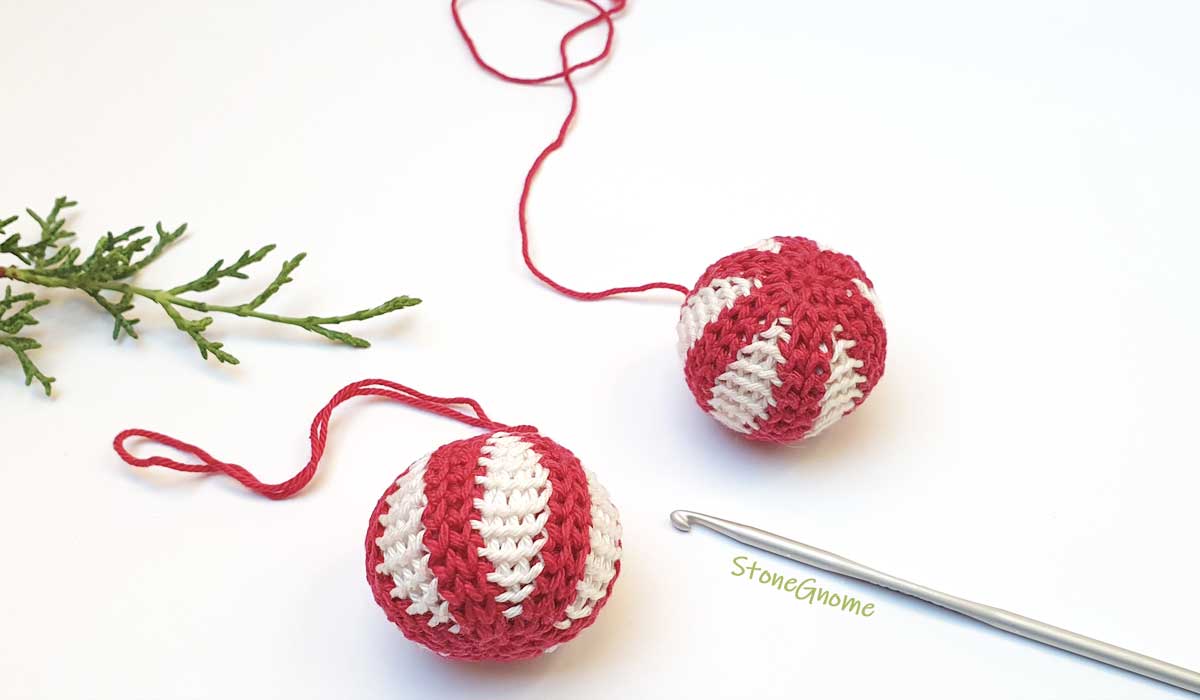
Crocheted Christmas Bauble
I've worked on different Christmas bauble ornaments, or Xmas balls the last few years. The first pattern is available below. Yeah!

Skills

The bauble is an intermediate/advanced project. If you are familiar with waistcoat stitches and slip stitches, the Christmas ball pattern is likely trouble-free and you can go straight to the yarn-hook suggestions and the pattern notes.

If the stitches - or this way of using them - are fairly new to you, a little extra effort might be required at first. I promise you, getting to know the stitches better is very well worth it.

Want more details about this way of working? Read: Tessa's Triangles - Hexagon Pattern

You should feel comfortable making uniform stitches of all kinds and it is also good to know how to adjust the tension of your work. - If not, read this one: How to Change and Control Your Tension

A Note about your Hook

A perfect hook for waistcoat stitches has a head that is slightly smaller than the neck and is pointy or has a lip/nose that makes it easy to insert the hook between the legs of the previous stitch.

Remember. We should always use the neck of the hook to determine the size of our stitches - and avoid tightening them after the loop leaves the hook. With waistcoat stitches, it is even more important or it will be difficult to make the following round.

Read about wellformed waistcoat stitches here: Waistcoat Stitch and Stitch Patterns in Rounds.

Yarn-Hook & Size

The bauble should be rather small to keep it light. A Catona-yarn-bauble like mine will be around 5cm (2") wide/tall.

I used:
  • Scheepjes Catona (Ravelry) 125m/50gr (138 yds/1.76oz)
  • hook size 4mm for the main parts and 3mm for the final round (US G6 and D3, UK 8 and 11).
However, any cotton yarn doable for amigurumi should work with this pattern. It could be cotton yarn with yardage 170m/50gr (186 yds/1.76oz) and hook size 3-3.5mm (US D3-E4, UK 10-9). For the final round use a slightly smaller hook for a nicer closing.

Crochet Christmas Balls

The Striped Bauble Pattern

The bauble is worked in rounds in a continuous spiral. (No joining with a slip stitch after each round).
Make not-tight stitches to make it easy to work with. Be thorough with the size of your chains. Adjust accordingly if needed, like when you change color.
Use a stitch marker or a long piece of yarn to mark the beginning of a round.

Use 3-4 stitch markers or tiny stitch holders for the final round.

Special Stitches

Slip stitch BLO decrease (slst-blo-dec). Hook into back loops only (blo). Hook into the next two stitches in reverse order. Yarn-over and pull through all loops. For more info and a video, see Slip Stitch Tutorials - Part III.

Unfinished-ws. Insert the hook between the legs of a stitch, yarn-over and pull up a loop, yarn over, and pull through one loop only. Keep the extra loop on the hook.

Waistcoat stitch decreases (cap version only). Insert the hook between the legs of the next stitch, yarn-over and pull up a loop, do the same for the next stitch so you have 3 loops on the hook, yarn-over and pull through all loops on the hook.

Abbreviations

ch = chain
sc = single crochet stitch
ws = waistcoat stitch
ws-c = Ws with a color change (see below)
slst-blo = slip stitch in the Back Loop Only (blo)
slst-blo-c = slip stitch BLO with a color change
slst-blo-dec = slip stitch decrease - in the back loop only
* * = Repeat instructions within * * all the way round
( ) = Repeat instructions within the parentheses as many times as instructed.
[ ] = number of stitches in the round

Color changes are marked ‘-c’. Change color while pulling up the last loop of a stitch, so the new color is ready for the next stitch. For slip stitches, pick up the new color immediately.

Instructions

Foundation
With red yarn. Make 6 loose sc in a Magic Ring. Pull the Magic Ring loosely together. [6]

1st Half of the Red Ball
  1. *1 ws in the first sc,1 ws-c in the same/current sc,
    ch-c 1 (change color to red immediately). *
    Repeat from * to * all the way. [18]

  2. Keep changing color so all ws appear red and all slst appear white.
    * With red. 1 ws in the ws,
    1 ws-c in the next stitch.
    With white; 1 slst-blo in the chain,
    1 slst-blo-c in the ws *.
    Repeat all the way. Start the repeats in the CURRENT ws. [24]

  3. This round you will have 3 white slst between the ws.
    * 1 ws in the current stitch,
    1 ws-c in the next stitch,
    1 slst-blo in each slst,
    1 slst-blo-c in the ws * [30]

  4. Repeat round 3. This round you will have 4 white slst. [36]

  5. Repeat round 3. This round you will have 5 white slst. [42]
Tighten the Magic Ring and weave in the yarn end from the beginning of the work. - Or - if you dare try if it will work for you, just tuck the loose end inside the bauble with or without a knot. - I mostly don't make a knot, mine are fine as long as they are only used for decoration purpose.

2nd Half of the Red Ball

  1. Begin this round in the ‘current ws’ and make the repeats from the ‘next ws’.
    * 1 ws in the ws,
    1 ws-c in the next ws,
    1 slst-blo in the next 4 slst,
    1 slst-blo-c in the last slst * [42]

  2. Repeat the previous round. [42]
Prepare to fill the bauble. Depending on your tension, yarn, and more, the white part might arch inward. Use it if you like, or fill the bauble firmly in the end, if you want a very round ball.

  1. * 1 ws in the ws,
    1 ws-c in the next ws,
    1 slst-blo-dec,
    1 slst-blo in the next 2 slst,
    1 slst-blo-c in the last slst * [36]

  2. * 1 ws in the ws,
    1 ws-c in the next ws,
    1 slst-blo-dec,
    1 slst-blo in the next slst,
    1 slst-blo-c in the last slst * [30]

  3. * 1 ws in the ws,
    1 ws-c in the next ws,
    1 slst-blo-dec,
    1 slst-blo-c * [24]

  4. * 1 ws in the ws,
    1 ws-c in the next ws,
    1 slst-blo-dec-c in the slst. * [18]

  5. * 1 ws in each ws * (Skip all slst). [12]
If you don't want a cap, head directly to the Final Round (No Cap). Otherwise, prepare for the cap. Use the colored yarn.

  1. Make waistcoat stitch decreases all the way [6]
slst and cut the colored yarn, Pull the yarn end through the loop. Secure ends. A little knot using the white and colored yarn should be fine. Tug the loose ends into the bauble. Gaps between the last round of stitches should be closed after the next round.

The Cap

Use a smaller hook and golden yarn. Attach the yarn by inserting the hook between the legs of the last waistcoat stitch (as if doing a new waistcoat stitch), yarn-over, and pull through. This doesn’t count as a stitch. To hide the loose end of the golden yarn, crochet over it for the next rounds.

  1. Make 2 rounds of waistcoat stitches.

  2. Slip stitch into the next stitch, cut a long yarn end, and pull through the last loop.
    Tighten the last slst.
Create a loop for hanging the ornament
Attach a needle to the yarn end. Insert the needle into the next stitch and out in the middle of the cap.

While leaving most of the golden yarn to form a large loop, bring the needle back into the cap's center, and out at the bottom of the cap, then reinserting it right next to the initial point.
Tie a knot using the large loop and the short loose yarn end. Tuck the knot and the yarn end into the cap to hide it.

Change to a hook 1 size smaller.

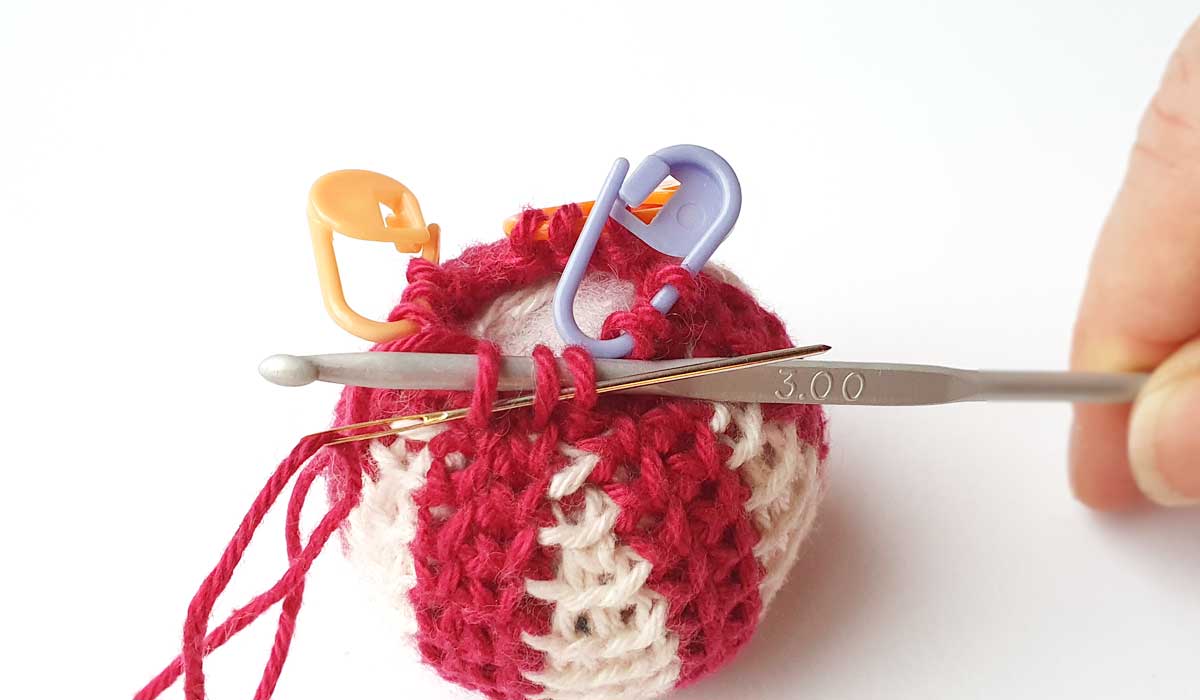
Make 1 ws in the first stitch and unfinished-ws the rest of the way. Every time you have 4 loops (max) on the hook, move 3 loops to a stitch marker /stitch holder (or just a piece of string). The loop you made last, keep that on the hook.

Last round of the Christmas Ball

Cut a long yarn end. Pull the yarn end through all the loops on the hook and then all the loops on the stitch markers. Use a needle or a hook.

Insert a needle

Fill the bauble - firmly for a round ball.
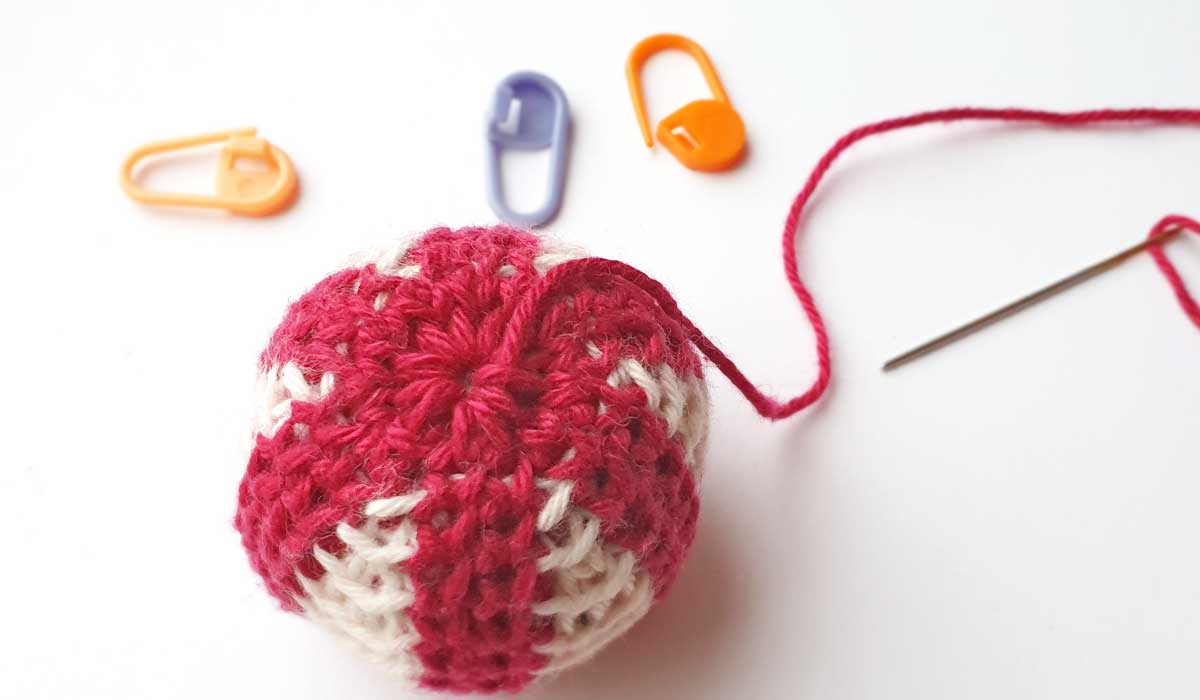
Tighten the yarn end and use a needle to secure it by going around in the last loops once more.

Closing the Christmas Ball

Insert the needle into the ball and let it emerge from the middle of the 'star'.

Striped Christmas Bauble Crochet Pattern

Please let me know below, if you chose this cap-less solution. - Otherwise, I might eventually remove this part :)

You are all done!

Shape the Christmas bauble by hand if needed and have a lovely crochet Christmas!

...Psst!

Waistcoat stitches are not used much with traditional patterns but are very fun to work with.
If you liked this, try other projects using waistcoat and slip stitches. You find them under the theme Waistcoat Stitch Love.
Originally published in 2022, last updated in 2024.
Share
Pin
No comments
Crochet with 3 strands of yarn
Working with 3 strands at once is faster and creates a softer, more unique texture compared to a single bulky yarn - and you might save yarn too. 

Crochet with 3 strands of yarn

Here, you'll find helpful tips on yarn usage, hook size, and more to make the process smoother!

Contrary to what you might think, crocheting with 3 strands doesn’t mean juggling 3 separate yarn balls. In fact, you can work with just one yarn ball, avoiding the mess altogether.

It’s not as tricky as it sounds, but it helps to be comfortable with your stitches to avoid confusion with the extra strands.

This post was originally published in March 2018 and was re-written as of October 2024.

Comparison. Regular vs 3-strand Yarn

Below, I’ve compared a regular wool yarn with a 3-strand wool yarn. Both have the same (total) weight per length, and the single crochet stitch rows were made with the same hook.

Spot the difference: Regular yarn vs 3-strand yarn

You’ll notice that the 3-strand yarn creates a slightly fluffier texture, taking up a bit more space than the regular yarn, even though their weight is the same.

Guide - Avoid the Mess

You can create 3 strands from a single skein or ball, preventing the tangles you’d get from using 3 separate balls. To do this, fold the yarn to triple it, as shown in the photo, and make the tripled yarn long - longer than what’s shown. I prefer making it at least 1 meter (40 inches) at a time.

Tripling the yarn

Make your slip knot as usual - or skip it* - and begin your project. 

*Read more: Avoid an Ugly Slip Knot

Running out of yarn

Eventually, you’ll run out of  3-stranded yarn. 

Pull up more strands

Simply pull on the end of your working yarn so it unfolds from the loop. Keep pulling until you have another long section of 3-stranded yarn to work with.

If you prefer a video demonstration, Ira Rot has a helpful video tutorial for this technique.

TIPS

A few tips to make your projects easier:

Hide Folding Points

In most cases, the points where you fold the yarn won’t show in the final project. However, if you’re working on a particularly delicate or detailed project, it is possible to hide them. You can either adjust the tension slightly, which will move the folding point. - Or - if the folded point lands on the front loop, simply remove the loop from your hook and turn it around so that the front loop becomes the back loop.

Read more: How to Change and Control Your Tension

Avoid Twisted Strands

Twisted strands will look different from not-twisted strands. It can affect the way they 'Fluff'. To keep the strands straight and airy, straighten them whenever you notice a twist. This extra attention can help maintain a special texture that adds extra to certain projects.

Hook Size

When comparing 3 strands to a same-weight regular yarn, a good rule of thumb is to use the same hook size. However, you might also benefit from using a hook 1-2 sizes larger (1-2 mm) since the fluffiness fills in the stitches differently and takes up more space making your project look more substantial without extra material.

Yarn Usage

A larger hook size, also means you may need a little less yarn for your project—not a bad bonus!

Again - it all depends on your project, though totally worth to try.

Perfect for...

3-stranded yarn is particularly well-suited for looser and more open stitch patterns or in exchange for a bulky yarn.
Read more: Comfy Crochet Footies

In open stitch patterns, you’ll really see the difference compared to using regular yarn. Some great stitch patterns to try include the Moss Stitch (and for my Danish readers: 'vævehækling') or the Tunisian Full Stitch. But don’t limit yourself—feel free to experiment with any stitch pattern!


Regular crochet moss stitch and Tunisian full stitch
Left: Moss Stitch in regular crochet. Right: Tunisian Full Stitch

I’ve worked on several projects using the 3-stranded crochet technique, and I absolutely love the texture and feel it creates. Check out how 3 strands look with the Tunisian Reverse Stitch.

I haven’t tried felting with this method yet, but it seems promising - definitely something to experiment with in the future!

Enjoy

The latest StoneGnome pattern where you can use the 3-stranded technique is the Comfy Crochet Footies.
Comfy Crochet Footies

Enjoy exploring this completely new world of textures and styles you can create with 3 strands of yarn.

Share
Pin
2 comments
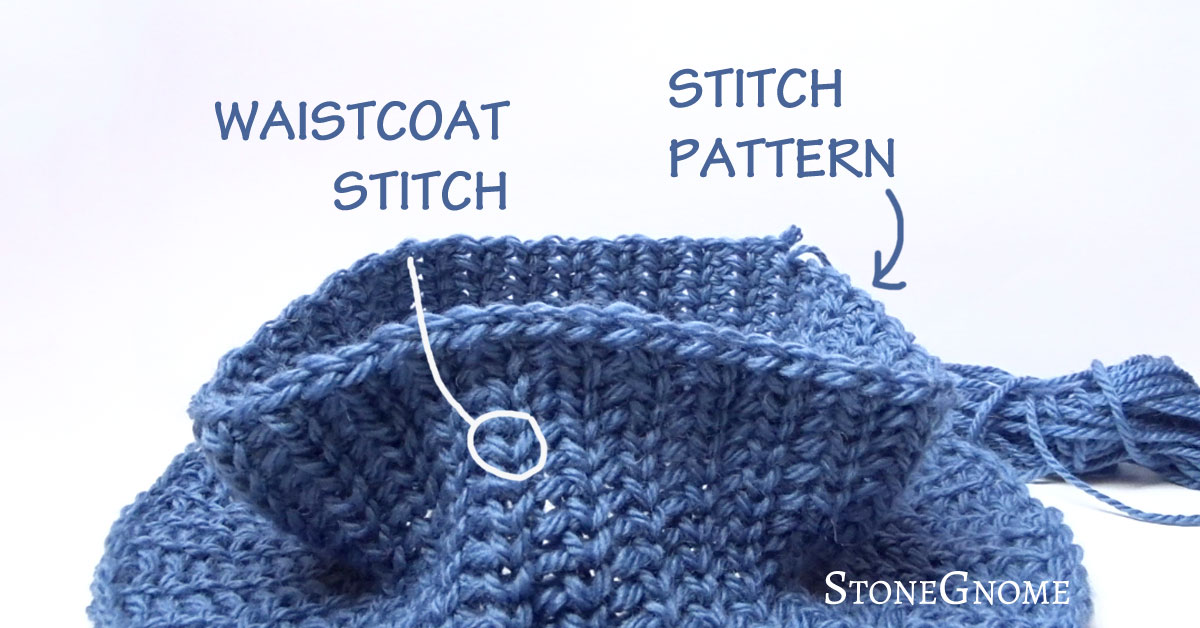
The waistcoat stitch is a brilliant two-faced thing. But be aware of the waistcoat stitch trap!

The knit stitch aka waistcoat stitch

To unlock the waistcoat stitch's full potential, it helps to know its secrets and understand the nuances of the waistcoat stitch.

Most crocheters call the waistcoat stitch dense and sturdy while a few of us love it for its drapiness and flexibility.

And why is that? Because there are at least TWO versions of the waistcoat stitch! They differ slightly in appearance and significantly more in structure and flexibility.

You should know about both versions, so you can choose which one to use for a project.

How to Work the Waistcoat Stitch(es)

The Basics

The stitch is created by inserting the hook between the legs of the next stitch.

And then there is a trap: There is a vertical bar at the back of the stitch*. It matters whether the hook is inserted before or after this vertical bar. Zoom in at the topmost image to see it.

*Note. Actually, there are two bars at the back. The main culprit is a very straight up-and-down (vertical) bar, while the other is slanted and sits on the side of the stitch. The slanted strand is positioned so far to the side that I doubt anyone considers using it today when working a 'normal' waistcoat stitch. If we count it, we have 3 versions of the stitch. I will disregard this 3rd version for now.

The Most Common Waistcoat Stitch version

Most crocheters naturally insert the hook AFTER the vertical bar at the back. For right-handed crocheters, this is at the left side of the back bar. This is the natural motion when you have the hook in one hand and push it into a stitch.

The waistcoat stitch, natural move of the hook

This gives you one version of the stitch. The denser one.

Currently, the tight version of this stitch is commonly demonstrated in tutorials for the waistcoat stitch. It is likely that most crocheters are not aware of the alternative option or do not consider it to be important.

The 'Secret' Waistcoat Stitch version

Another option is to insert the hook BEFORE the bar at the back. For right-handed crocheters, this means inserting the hook at the right side of the back bar.

This gives you another version of the stitch. A stitch with more drape.

Stitch Hacks

There are different approaches of how to insert the hook when working the last stitch version.

Method #1
Some crocheters elegantly twist their hook, angling it more directly into the stitch or even slightly backward, in the opposite direction. Some of my testers prefer this.
Olga Poltava recently uploaded a YouTube video demonstrating this way of entering a stitch.

Method #2
I prefer to use the lip/nose of my hook to guide the hook into the right place. If necessary, I can use my fingertip at the back of my work to keep the back bar clear of the hook

If you want to try the nose/lip first, then take a look here:


Tips for the Drapey version
  • Find a hook that works for you AND the stitch. Avoid a bulb-headed hook. It's challenging to insert a very blunt crochet hook into the center of a stitch.

    I prefer a tapered hook. However, I did have testers that worked fine with Susan Bate's inline hooks.

  • Crochet lose and control your tension. Once you have pulled up a loop lift your hook a little above the work to crochet looser. 
Read more: How to Change and Control Your Tension

And be patient. If you've never tried this version before, it's like learning a new stitch, so, it may take some time to become accustomed to.

What is the difference?

There are differences between the two versions.

Leaning and Dense

The dense version of the stitch captures more yarn, resulting in a structure where the strands are more entangled and closely packed together within each stitch. This tight interlocking of strands reduces flexibility.

As the denser stitch version grabs the back bar, it is pulled slightly to the side, causing the waistcoat stitches to lean. 

The leaning and dense waistcoat stitch

On the wrong side of the work, the stitches create a neatly structured yet slightly skewed pattern, with the stitches shifting. Being an organized chaos or a coordinated mess.

Straight and with Drape

The less dense version of the waistcoat stitch doesn't grasp the back bar. This allows the strands within each stitch to move more freely, resulting in greater flexibility in the work. Additionally, capturing less yarn means the fabric becomes slightly lighter, creating a thinner texture. With a looser structure, the fabric also gains more drape.

The less-dense waistcoat stitch version hardly leans at all. 

The straight and softer waistcoat stitch

On the wrong side, the stitches also line up beautifully inside each other.


The origin of the Waistcoat Stitch(es)

It is often impossible to determine the exact origin of a stitch, though in this case, we have an approximate idea.

In 2013 Oombawka wrote about the waistcoat stitch and found a book from 1915 (thank you for sharing, Rhondda). The book refers to the waistcoat stitch as 'the new chain stitch', so it is possible the stitch was a recent development when the book was written. 

I recently dug into the same book and was quite surprised to find BOTH versions of the waistcoat stitches in there. 

Understanding the instructions might be a bit difficult. I have highlighted the important parts showing the differences in the working methods of the two stitches. The pictures also provide a clue to distinguish between them.

The waistcoat stitch aka the new chain stitch

It looks to me like the New Chain Stitch is the drapey version of the waistcoat stitch. It looks like the stitches should line up on both sides of the work.

The German waistcoat stitch

The second waistcoat stitch version in the book is a slanted version. At the time it was called the German Waistcoat stitch.

Just to be fair. It is unclear whether the hook is inserted to the left of just one back bar or possibly to the left of both back bars, including the slanted one.
Source: The Sunlight book of knitting and crocheting p. 25-26.

Which Waistcoat Stitch Version to use?

If a pattern does not specify a certain stitch version, it's likely that the designer is only familiar with the 'German' waistcoat stitch version and designed the pattern accordingly.

Then you can choose what to use:
  • Opting for a small hook and the dense 'German' version of the stitch results in a tight, dense, and thick fabric. Cotton yarn emphasizes this. Great for sturdy things like a hat or maybe amigurumi. You also get a nice spiral look, that can be very decorative.
  • Choosing a large hook and using soft, flexible yarn to work the drapey version of the stitch results in a fabric that looks and works more like stitch-stretchy knitted stockinette. Smooth and soft. This fabric is ideal for wearables, blankets, and even softer types of amigurumi, although using a smaller hook may be preferable to keep the filling in place.
I suggest you choose what works better for a specific project and for the result you want to achieve.

Enjoy your next waistcoat stitch project :)

Share
Pin
No comments

Crochet a Halloween Pumpkin. Make it happily orange, stylish, or scary.

Crochet Halloween Pumpkin

Add eyes and a mouth to your pumpkins for a playful touch, or let them keep a chic and neat look.

Updated September 2023.
The pattern has been tweaked and a few helpful images have been added.

The pattern has two pumpkin variations with stem and blossom. It also includes a leaf and wings. A small (optional) twist makes the wings mirrored.

The Halloween Pumpkin pattern includes a lot of helpful images - and is available in English and Danish.

Purchase the pattern now, right here: Buy Now

Or visit Ravelry, LoveCrochet, or the StoneGnome Shop.

Skills Needed

All the minor parts are made with regular crochet stitches. 

The body/head of the pumpkin is made with Tunisian crochet stitches. If you don't know Tunisian crochet, don't worry. You will only need to learn a couple of basic Tunisian crochet stitches to make this, and it can be made with a regular crochet hook (with no handle).

Halloween crochet pumpkins

Reverse Stitches

This is totally optional. But if you want to make the wings truly mirrored, a few unusual stitches are explained in the pattern.

I've borrowed the technique from Tunisian crochet where they are called 'reverse stitches'. However, it is different from the kind of reverse stitches we usually relate to, when we do regular crochet. 

See more in the pattern or check this out: Another kind of Reversed Stitches.

Happy Halloween!

Share
Pin
No comments
The waistcoat stitch is a lovely little thing and you can make beautiful yet easy and fast-worked stitch patterns with it. Let me show you.

Waistcoat stitch and stitch pattern tutorial

Share
Pin
No comments
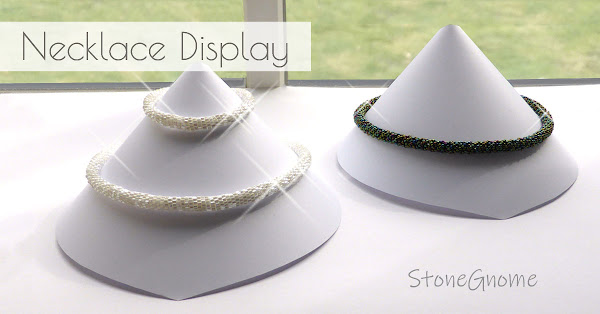
Make an angel display for a crocheted necklace or a beaded crochet necklace. The display can be used for selling items at a market, if you attend an exhibition, or maybe for a special gift. 
Necklace Display - for Beaded Crochet Necklaces
I made the display in 2017 for an exhibition I was attending with other textile and yarn freaks; weavers, filters, knitters, and crocheters. I wanted to present my crocheted necklaces in a nice way.

UPDATE: Due to requests, this writing and the templates below have been updated in January 2023.

First, I found a template (and tutorial) at Georgia P Designs. There are cones for bracelets, a cone for a necklace, and a flat-back necklace display stand.

However, one of my necklaces comes with a tight bracelet. I wanted the necklace and the bracelet to be on the same display, which required the bottom of the template to be rather wide compared to the top of the template. Otherwise, the distance between the two would be too big.

After playing around for a little while, I ended up with a display shaped like angel wings. 
The files are available from my google drive. You can get a full-size copy from the links.

  • Angel Display template - as JPG
  • Angel Display template - as PDF
Make the printed side the back of your cone. The print on the template files is rather pale, so it doesn't show through the paper.

If you can't print close to the edges, you can shrink it a bit (your printer dialog should help you with this) - OR you can ignore the missing print at the margins. It should be fairly easy to guess where to cut. Use the dotted line as a guide for the front tip.

Necklace Display - Angel Wings

Carefully fold it, so the back flaps overlap with about 1cm (0.4in), and glue the part that overlaps.

I've used heavy 190g A4 paper with a very smooth surface, so I sewed a couple of stitches on the back to make the necklaces and the bracelet stay in place. I've seen others cover the display with wallpaper or likewise and I'm guessing a rougher surface will prevent the necklaces from slipping.

The Exhibition

The keywords for the exhibition in 2017 were to show some of the many different things you can do with yarn and textiles. It used to be an annual recurring event in Gudhjem Museum (Denmark, Bornholm). The last years have been hard on exhibitions due to lockdowns and restrictions, but hopefully, there will be more yarn and textile exhibitions in the future. 

I enjoyed the beaded crochet work a lot, so I might also need the displays again one day.

Read more: Beaded Crochet Rope Necklace

Links to Display Ideas

Here are a couple of other display ideas and templates in case you need something special.
  • Georgia P. Designs templates and tutorial
  • A Plywood Jewelry Pyramid tutorial can be found at Collectivegen.com (former 'A Pair & Spare'), which also posted templates for a couple of Wooden Jewellery Holders in May 2022.
  • 3 other DIY Necklace displays are present at Tutorial De Artisana (eng: Craft Tutorial)
Share
Pin
No comments
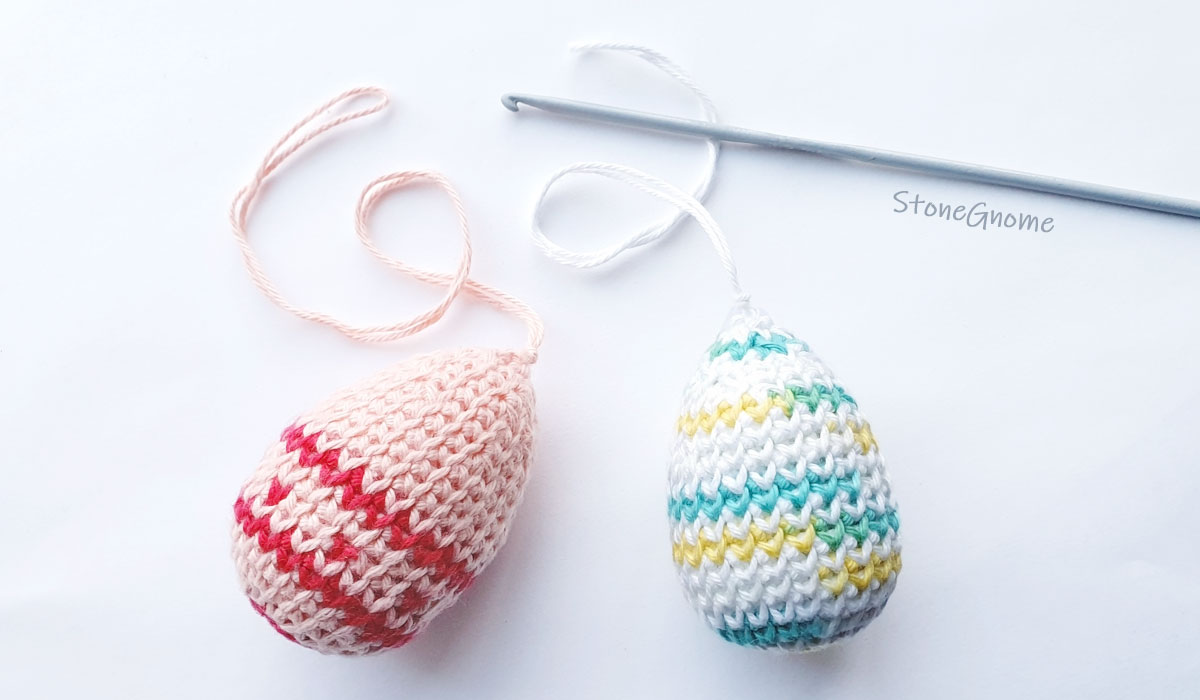
Crochet your own decorated eggs. Use a basic egg and change colors as you wish for nicely decorated eggs.

crochet Easter eggs

If you use waistcoat stitches for your egg you get different options. Like small, heart-shaped dots ♥ 

Share
Pin
No comments

The innovative crochet pattern is great as a winter project. Tricky Triangles is a mandala presenting a new way to crochet in the round.

Tricky Triangles Mandala Crochet Pattern

The mandala will be soft and drapey and excellent for making a pillow or you can make it a decorative table topper. There are a lot of other possibilities for hexagons if you google it.

The Mandala

I'm not sure if the level of it is beyond basics or advanced. It might more be a matter of preferences and whether you can find a hook that works for you.

It's colorwork and it requires you to make somewhat uniform stitches. The main stitches are slip stitches and waistcoat stitches. If you are not sure whether these stitches suit you or not, try the FREE introduction pattern Tessa's Triangles first.

Read more: Slip Stitch Tutorials.
Read more: Waistcoat stitches and Stitch Patterns in Rounds

Tricky Triangles comes with a 30% introductory discount. The discount is only available on Payhip or Ravelry and runs out in 2 weeks (Nov. 18th Copenhagen time). Use the coupon code TRICK to get the discount.

The mandala pattern is available in English (US terms) and Danish. 

Get the pattern at Ravelry, at LoveCrafts, or right here via my new Payhip Store.

Tricky Triangles

Yarn, Hook sizes, and Final Sizes

In theory, you can use any three yarn balls and a relatively large hook. Preferably a hook with a relatively small head. For the best result, the yarn should be uniform and soft, with a smooth look.

The yarn I have used is very soft and likable, so I can certainly recommend it.


Peppermint and Licorice
Hook size 5mm (H-8). It gets around 30cm (11.8") wide.
Crochet Mandala. Peppermint and Licorice Scheepjes Organicon/Bamboo Soft.
Organicon - 220 Broken Almond
Bamboo Soft – 263 Smokey Diamond (dark)
Bamboo Soft – 264 Antique Silver (grey)
(Big) Red.
Hook size 8mm (L-11). The red is approximately 37cm (14.5") wide.
Crochet Mandala. (Big) RedScheepjes Merino Soft.
645 Van Eyck (orange)
621 Picasso (red)
623 Rothko (dark red)

Yarn Packages

Littlebugz.dk made yarn packages for both versions. It might be of most relevance if you live in Denmark, Sweden, and Norway - or close. She is good at adding discounts on yarn packages for my patterns.

Have a look at the yarn packages at Littlebugz.

FYI. A lot of the yarn I use is sponsored by Littlebugz.dk. Littlebugz then makes yarn packages for my patterns. And in case you wonder. Littlebugz doesn't sponsor my opinion or anything other than the yarn 😊

Thank You

Thank you to all that have helped me out. Janelle did a great job before it was even a pattern. She helped me with terms and the structure of the written pattern. Then Anita Reinehr came in early to do a superb tech edit. Unusual yes, but with a new thing, it felt important to do a tech edit before having the pattern tested. 

Finally, a lot of people did testing. Some just partly, some only on the early Tessa's Triangles. Thank you to all of you too; Pamela Tan, Robyn Kaltea, Ruth Lister, Jess Wells, and more.

Share
Pin
No comments
Here is a nice little FREE spider web pattern.
Spider Web Crochet Pattern

Use it for a coaster or make more rounds and use it as a table topper. Once you get the pattern it is very simple and you decide how big you want it.

Yarn and Hook Suggestions

You can make it of any yarn you want and then a relatively large hook. Btw, I recommend a dark but NOT BLACK yarn, to begin with. It is VERY difficult to find the right places to insert the hook, when using black yarn and working with waistcoat stitches.

I’ve tried two combos that worked well for me:
Mixed Fingering Yarn (Semi-light)
  • Wool yarn blend (orange) and cotton yarn (black). Both with yardage around 210m/50gr (230yds/1.76oz)
  • Hook size 4 mm (US G-6)
Cotton Yarn - Fingering
  • Cotton yarn for amigurumi with yardage around 170m/50gr (186yds/1.76oz)
  • Hook size 5 mm (US H-8)
If you are making a coaster meant for warm chocolate, tea, or coffee, you should use pure cotton yarn.

Instructions

The spider web pattern is based upon Tessa’s Triangles (a hexagon pattern). You can find tips and secrets in Tessa’s Triangles that can be useful for the spider web as well.

Abbreviations
sc = single crochet stitch
ss = slip stitch
ws = waistcoat stitch
-blo = back loop only
** = repeat all the way around

A waistcoat stitch is a single crochet stitch, where you insert the hook between the legs of the previous stitch.

Start with the web color (dark).

Foundation
6 loose sc in a magic ring. Add a stitch marker between the legs of each stitch if it helps you.
Join the round with an ss-blo in the first sc.
Note. This is a tricky part as the first sc can be pulled at so much, that you can’t find where to insert the hook when doing the ws. This is why I recommend attaching stitch markers right after making the magic ring.

Round 1)
*ws in the current sc (change color to orange while pulling up the last loop of the ws),
ss-blo in the next sc while changing color again *
Note. Work the final ss-blo into the first ws of the round.

Round 2)
*ws in the current ws (change color to orange while pulling up the last loop of the ws),
ss-blo in every ss,
ss-blo in the next ws while changing color *

Round 3-4)
Repeat round 2

Round 5-6)
Repeat round 2, but without the color changes.

More Rounds
Work round 2-6 as many times as you want.
Crochet mini spider web

Final Two Rounds

Round 7)
Repeat round 2

Round 8)
ws in the current ws (change color to orange while pulling up the last loop of the ws),
* ss-blo in every ss,
ss-blo in the next ws while changing color,
2 ws in the current ws (change color to orange while pulling up the last loop of the second ws) *

Note. Work 2 ws in the first stitch of the round too, but skip the color change.

Finish Off
Cut the yarn.
Expand the last loop till the yarn end is through.
Weave in the ends.

Happy Halloween!
Share
Pin
No comments
Have you noticed Double Crochet Stitches (dc) tend to get skewed/slanted? Sometimes it's very visible and if you want to straighten them out, the solution is simple and easy to remember. It can be used for taller stitches too.

Avoid Skewed Double Crochet Stitches

For me this mostly applies to open crochet projects, However, it does happen that I also use this technique in something like a granny square with lots of DCs next to each other. It just adds a little extra to the overall look.

When your double crochet (dc) stitches don't line up as beautiful as you want, the reason can be, that you have a very open pattern and/or very loose stitches. The loose work makes room for the foot of the stitches to move a little in the horizontal direction. Chevron patterns can make the imperfection even more visible.

Another Double Crochet Tip: Start a Row with a Fake Stitch

The Workaround

You avoid the messy look by inserting your hook differently. If you look closely at the top of a dc stitch, you can see the hole you would normally use. At the bottom right of the regular hole is a small loop. If you stitch through this loop, it will help the foot of your dc stay put on top of the previous dc.

Crochet nicer double crochet stitches

The slope only exists at the top of higher stitches, so don't look for it, when you are about to hook into a chain stitch.

Related article: Linked Stitches

Stitch Height

Your workaround stitches will be slightly shorter, than a regular dc. So don't change the way of stitching in the middle of a project. If you are about to start on a new project, then make sure to do your gauge swatch with the exact stitch you want to use.

Workaround for avoiding Skewed DC Stitches

When (Not) to Use the Workaround

As said already, this little double crochet trick is mostly needed, when you work on something loose, open, and/or chevron. If you work on a project with a lot of dc stitches close to each other - or a tighter piece - chances are, the stitches fill in all holes beautifully. 

Only in a few tighter cases - like an outside-in granny square I recently played around with - it makes sense. Here, the hole pattern relies a lot on stitches being placed upon each other. Hence I used the dc workaround and got really nice stitches.

Crochet Granny Square - Outside-in

Btw. the granny square idea shown here, was presented to me by Tuula Maaria @instagram. See her youtube video, if you want to try one too :)


Note. The original post was made in July 2017. The latest update is from May 2021.

Share
Pin
3 comments
Suddenly there were Bernie Sanders' mittens all over. What a joy and GREAT inspiration :) Like many other yarn geeks, I've tried to see if I could figure out the color pattern of the mittens.
I'm not sure, though I will make the actual mittens. However, I do have quite a detailed idea of HOW I would do it and maybe this could be of interest to you?

I would crochet in the round in waistcoat stitches (ws), so the mittens got the knitted feeling and would be as warm and cozy as they look at the photos of Bernie Sanders.

The Color Pattern

I had great fun making the color pattern. I used a drawing app on my iPad, that can do grids and layers, but I can also recommend StitchFiddle if you want to make your own stitch pattern and be sure your gauge works well.

Related blog post: From Image to Crochet Chart

Here is my green version of the color pattern. Choose whatever color you like.
Bernie Sanders mittens in green

Sketching Bernie Sanders Mittens

This is ONLY A SKETCH, but if you are interested in trying, you are welcome to use it. I will also gladly help you if you stumble upon something here, that you need help with.

Hook. Use a 5mm hook
Yarn. Stretchy wool yarn blend with yardage around 200m/50gr. Fingering (or possible Sport).

- - -
Foundation. Chain 30-42 to start with. A number divisible by 3. (Might need a swatch to test the gauge). Turn the chain row into a circle with a slip stitch. Work in a spiral.

Cuff ribbing. Crochet *2 ws, 1 ch* for several rows.

From cuff to hand. Waistcoat stitches only. Increase evenly in the first round (maybe two rounds). You will need a number of stitches divisible by 4 - plus 3 extra stitches (like 32+3=35).

Because. The color pattern is made of repeats of 4 stitches and the root of the thumb could require 3 stitches.

Make a couple of extra rounds. 2-4 rounds I think.

The Thumb
Below is how I would try to make the thumb. I would begin the colorwork right after starting the thumb part. So read both parts now.

Place two stitch markers with 3 stitches between them. The stitch markers mark the beginning and end of the hand. In between them is the thumb.

The middle stitch will be worked normally all the time. Increase when working into the other two stitches next to the stitch markers.

Increase at every second round or what works for you. Move the stitch markers up accordingly. Always increase in a stitch right next to the stitch marker and on the thumb-side of that stitch marker.

Once the base of the thumb is done, simply skip the thumb stitches and continue with the hand part (= skipping all the thumb stitches between the stitch markers).

Do the thumb-increase for something like 5cm (2inches).

Color Work
After initiating the thumb, I would start working on the color pattern as well. The stitch markers marking the thumb are placed in the first and last stitch of the hand. These are also the last and first stitches of the colorwork. So just pretend the thumb isn't there when you look at the color diagram.

Use a solid color for the thumb - or carry through the color from the color pattern.

Color Change Tips
Prepare a color change by changing yarn when you do the last YO-pull-through of a stitch. (Right before the visual color change).

Carry the un-used yarn color on the wrong side of the work or hide it by crocheting over it.

Finalizing the Hand

Carry on with the colorwork until you have about an inch left of the desired length of the mitten. Decrease on both sides at every round now.

Hopefully, you are now working with the dark color and don't have to figure out the colorwork at the same time.

Finalizing the Thumb
Crochet the rest of the thumb in any color. Work straight up till it is long enough and then decrease all the way around.

Would You like to Try?

Would you like to try? I'll be here to help you if you run into trouble. And who knows. Hubby asked for fingerless gloves long ago. One day, I might make him a pair using the color pattern above.

Have fun :)
Share
Pin
No comments
Older Posts

Newsletter

Don't miss the next tip or pattern
from StoneGnome.

Find StoneGnome at

  • Ravelry
  • LoveCrafts
  • Littlebugz

  • Facebook
  • YouTube
  • Pinterest
  • Instagram

Loop Legends

  • From Image to Crochet Chart
  • Tunisian Crochet Cast On
  • Free Snowflake Pattern
  • Fluffy, Fuzzy and Fur Yarn Tips
  • Mini Neck Warmer
  • How to Find Your Gauge
  • You Don't Need a Tunisian Crochet Hook
  • Knit Bornholm 2016

My favorite Links

  • StoneGnome Pattern Shop
  • StoneGnome at Ravelry
  • StoneGnome at LoveCrafts
  • Crochet Kim
  • Annie's Catalog
  • Designing Vashti
  • Stitch Fiddle
  • Stitchboard · Pattern Wizard
  • Free Vintage Crochet

Labels

Bornholm Split Crochet advanced amigurumi basic beads christmas crochet crochetChart easter edge felting filetcrochet freePattern guide hat miteredCorner ornament paidPattern pattern ribbing shoes slipStitch spiral stitchPattern topStitch tunisian tutorial

All Crocheticles

  • ▼  2025 (3)
    • ▼  June (1)
      • Slim Tunisian Breeze Scarf
    • ►  February (1)
    • ►  January (1)
  • ►  2024 (6)
    • ►  December (1)
    • ►  November (1)
    • ►  October (2)
    • ►  April (1)
    • ►  March (1)
  • ►  2023 (7)
    • ►  September (2)
    • ►  June (2)
    • ►  March (1)
    • ►  February (1)
    • ►  January (1)
  • ►  2022 (3)
    • ►  November (1)
    • ►  April (1)
    • ►  February (1)
  • ►  2021 (9)
    • ►  November (1)
    • ►  October (3)
    • ►  September (2)
    • ►  May (1)
    • ►  March (1)
    • ►  February (1)
  • ►  2020 (15)
    • ►  December (1)
    • ►  November (1)
    • ►  October (2)
    • ►  May (2)
    • ►  March (2)
    • ►  February (3)
    • ►  January (4)
  • ►  2019 (8)
    • ►  December (2)
    • ►  October (2)
    • ►  September (1)
    • ►  May (1)
    • ►  March (1)
    • ►  February (1)
  • ►  2018 (15)
    • ►  June (3)
    • ►  May (1)
    • ►  April (4)
    • ►  March (1)
    • ►  February (4)
    • ►  January (2)
  • ►  2017 (48)
    • ►  December (4)
    • ►  November (3)
    • ►  October (2)
    • ►  September (5)
    • ►  August (5)
    • ►  July (3)
    • ►  June (5)
    • ►  May (3)
    • ►  April (4)
    • ►  March (5)
    • ►  February (5)
    • ►  January (4)
  • ►  2016 (25)
    • ►  December (5)
    • ►  November (7)
    • ►  October (5)
    • ►  September (4)
    • ►  August (4)
FOLLOW STONEGNOME @INSTAGRAM

    Ⓒ StoneGnome · Created with · by BeautyTemplates